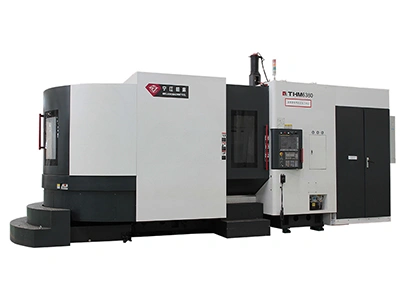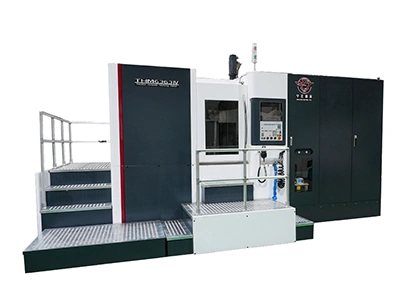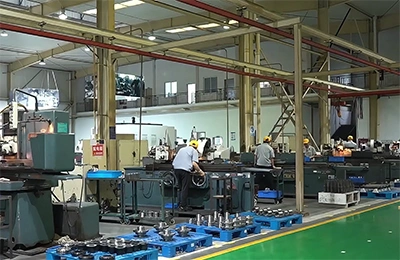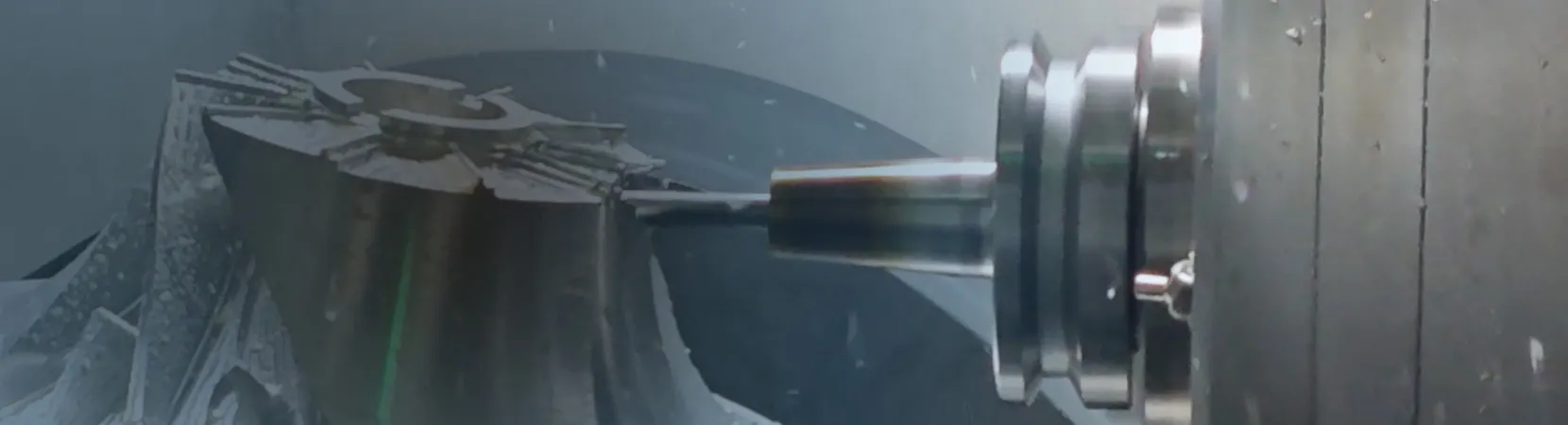
Horizontal machining centers with 500-1250 mm worktables use a T-shaped monolithic bed that provides the rigidity needed for heavy-duty cutting. The T-shaped bed distributes cutting forces evenly, reducing deformation during heavy cuts.
The cradle-type five-axis machining centers use a T-shaped monolithic bed to support the tilting rotary table, with worktable sizes ranging from 650 to 1200 mm.
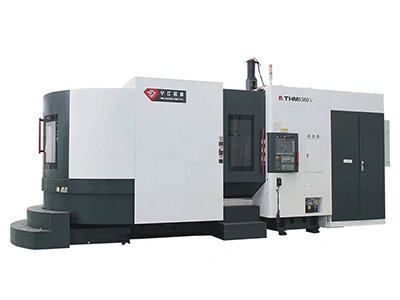
The 5-axis machining centers with a 45° tilt head use a T-shaped layout, with the column moving on the X axis, the spindle head travelling vertically on the Y axis, and the table advancing along the Z axis.
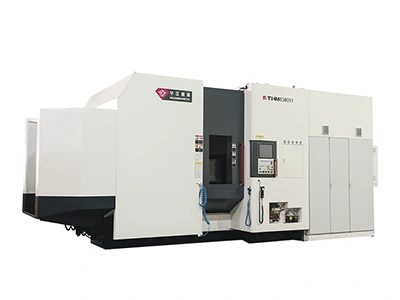
5-axis machining centers with a fork-type milling head use a T-shaped structure: the column moves on the X axis, the spindle head travels vertically on the Y axis and the table advances along the Z axis.
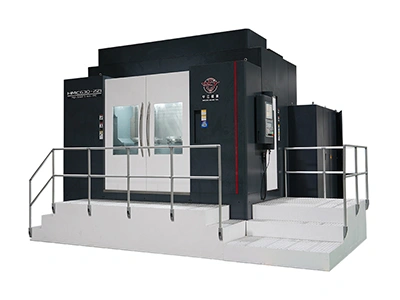
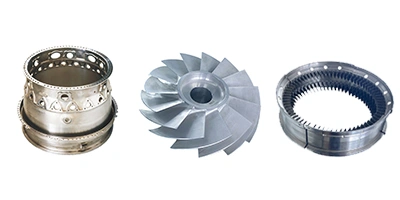
They are widely used for aluminum-alloy components in new-energy vehicles and aerospace production, since the dual-spindle and dual-rotary-table arrangement helps keep the surface finish cleaner, the dimensions more stable, and the machining time shorter.
Contact us for technical details, quotations or application-specific solutions. Our team will respond shortly.


The milling-turning machining centers combine the functions of a machining center and a turning unit, allowing milling, turning, boring, drilling, reaming and tapping to be completed in one setup. This reduces repositioning steps and helps maintain stable machining accuracy.
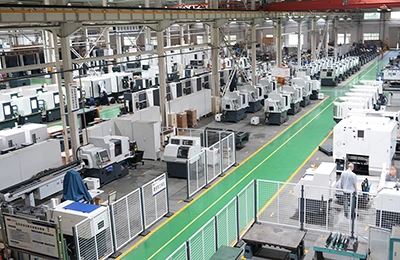
High-precision, high-speed and 5-axis machining centers can be configured together with automated storage modules, transfer units and a central control platform to form an FMS. This setup supports mixed-batch production, flexible scheduling and continuous operation during tool or part changeovers.
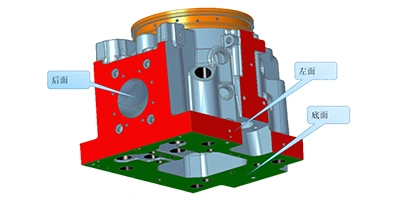
Machining centers equipped with dual spindles and dual rotary tables, supported by linear-motor drives and AI-assisted closed-loop CNC control, achieve positioning accuracy between 0.01–0.08 mm and repeatability between 0.005–0.04 mm. Multi-axis coordination also enables efficient machining of complex cavities and structural features, making them suitable for high-volume machining of blocks and housings.
Using anti-adhesion cutting tools together with high-pressure coolant (≥5 MPa, internal coolant preferred) helps control cutting temperature and prevents chip adhesion. Increasing the feed rate also shortens chip contact time and reduces the chance of built-up edge.